



OVERVIEW OF TRADE COMMODITIES
What is Forex Commodities?
Commodities are natural resources that can be processed and traded, are the basic building blocks of the global economy. They are natural resources traded on dedicated exchanges around the world. Some of the commodities that are tracked in the financial markets include metals, agricultural goods, energies and minerals.
Commodities are the essential components of other manufactured goods, essentially the building blocks for both industrial and domestic products and foodstuff. They are shipped globally to meet demand as not all countries are capable of producing every commodity they need.
The production and consumption of commodities depend on factors like seasonal, climate and resources – both natural and man-made. Demand is also influenced by economic factors and consumer habits. Due to this reason, commodity prices have the potential to fluctuate greatly.
Commodities are generally traded in very large quantities, either on the cash market, or more frequently, on the futures exchanges.
Commodity Terminology
Commodities are grouped according to similar characteristics that they share. Below are some general terms used to classify them:
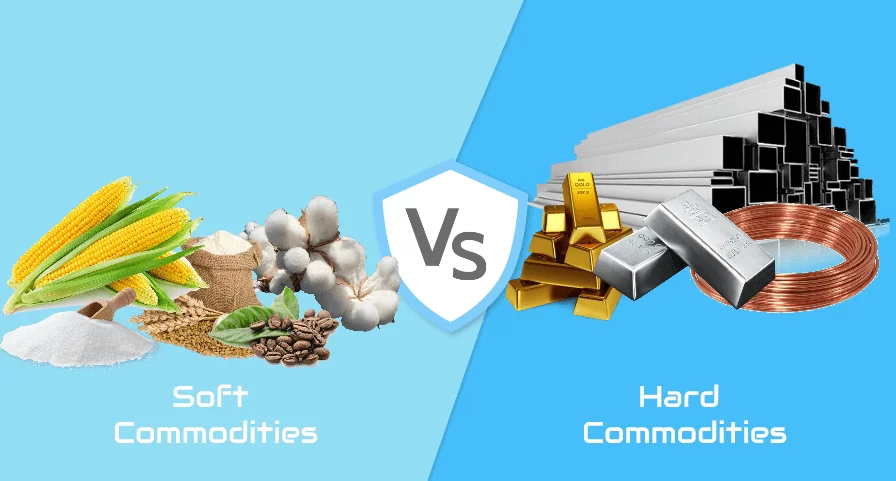
Soft Commodities
These are typically grown, rather than mined or extracted. Soft commodities tend to be very volatile in the short term as they are susceptible to spoilage which can suddenly and dramatically rock prices.
Producers tend to be heavily involved in the softs markets as they are often keen to lock in prices for their produce. Alongside the natural growing cycle of these commodities, this creates seasonal fluctuations in prices.
Some examples of soft commodities include: Corn, rice, wheat, sugar, cocoa beans, orange juice, cattle
Hard Commodities
These are typically mined from the ground or extracted from other natural resources. The initial commodity may also be refined into another commodity altogether. For example, oil can be refined into gasoline.
Some agricultural products, like cotton, are also considered hard commodities, as they do not spoil quickly and are considered industrial materials rather than foodstuffs. Hard commodities are generally easier to handle than softs, and are more easily integrated into the industrial process. This makes them a popular choice for investors; for example trillions of dollars’ worth of oil futures are traded yearly.
Some examples of hard commodities include: Oil, natural gas, cotton, aluminum, cooper, lead